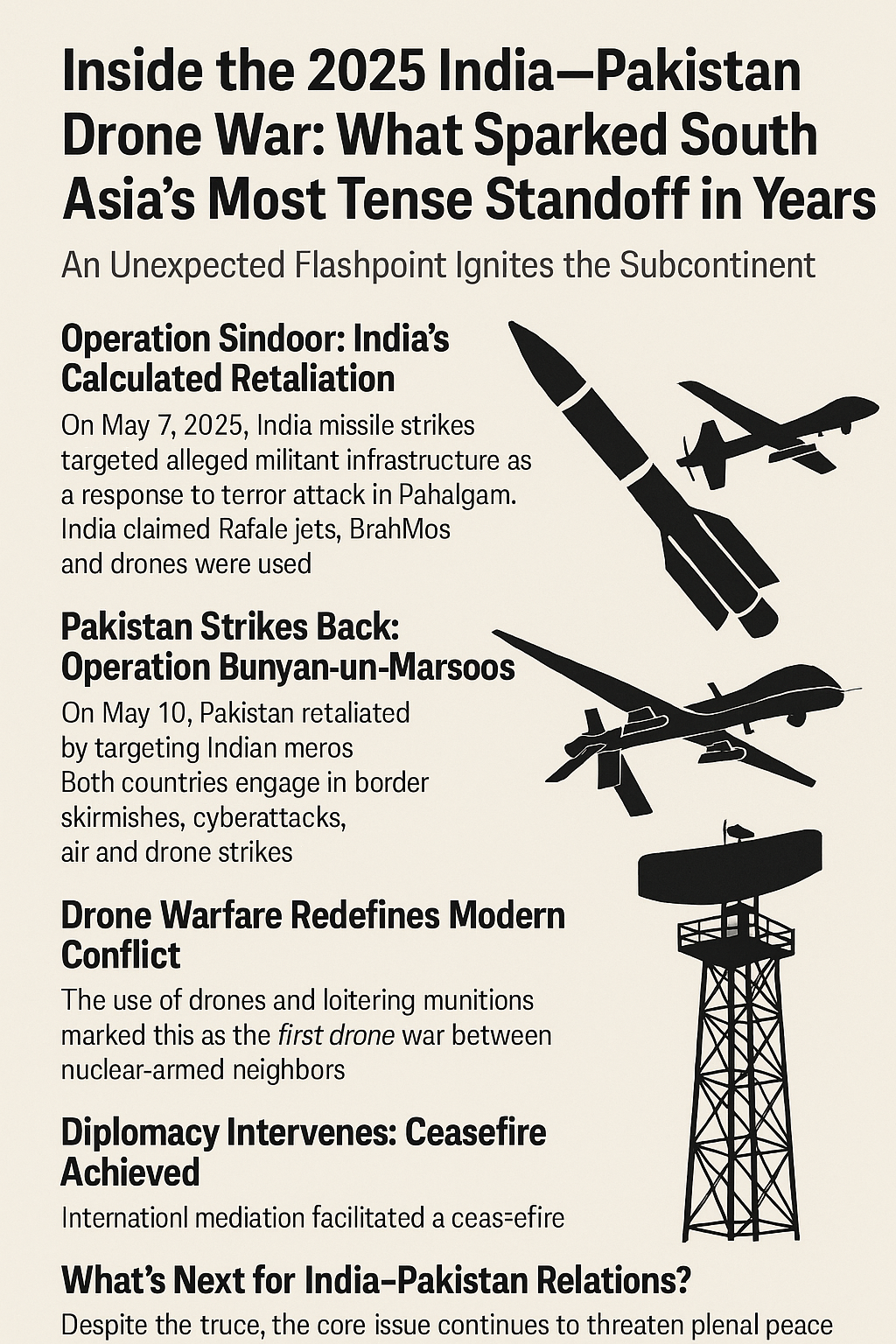
An Unexpected Flashpoint Ignites the Subcontinent
On May 7, 2025, South Asia was thrust into turmoil as India launched Operation Sindoor, a calculated missile offensive against targets in Pakistan. The operation, according to Indian authorities, was a direct response to a gruesome terror attack in Pahalgam on April 22, which claimed the lives of 26 civilians, mostly tourists. The assault reignited long-standing tensions between the two nuclear-armed neighbors, pushing the region to the brink of a full-scale war.
India accused Pakistan of harboring and supporting militant groups like Jaish-e-Mohammed and Lashkar-e-Taiba, who were allegedly behind the Pahalgam incident. Pakistan, however, firmly denied these claims, countering with accusations that India’s strikes targeted civilian areas, including religious sites.
Operation Sindoor: India’s Calculated Retaliation
India’s strikes, carried out using Rafale jets armed with SCALP missiles and AASM Hammer glide bombs, targeted nine key sites in Pakistan-administered Kashmir and Punjab province. The Indian Army reportedly deployed BrahMos cruise missiles and SkyStriker loitering munitions to ensure precision strikes. India described the offensive as “measured, focused, and non-escalatory,” asserting that only militant infrastructure was targeted.
Pakistan, meanwhile, described the attacks as a violation of sovereignty and responded by convening a National Security Council meeting, signaling a measured but inevitable retaliation.
Pakistan Strikes Back: Operation Bunyan-un-Marsoos
On May 10, Pakistan launched its retaliatory campaign, Operation Bunyan-un-Marsoos, reportedly targeting Indian military bases and airfields. While Pakistan insisted that its response was limited to military targets, Indian authorities accused Pakistan of aiming missiles and drones at civilian areas, including religious sites in Jammu.
The situation spiraled further with both nations engaging in intense cross-border skirmishes, cyberattacks, and air and drone strikes, marking this as the first drone war between nuclear-armed neighbors. India claimed to have intercepted several Pakistani drones and missiles using its advanced S-400 missile defense systems, while Pakistan reported downing Indian Rafale jets and Israeli-made drones.
Drone Warfare Redefines Modern Conflict
This brief but explosive conflict rewrote the rules of modern warfare. Both India and Pakistan deployed drone swarms, loitering munitions, and advanced air defense systems in combat. Reports cited that India targeted Pakistani airbases and radar installations deep within Pakistan, while Pakistan used drones to strike areas across Indian Punjab and Kashmir.
A drone even landed inside the Rawalpindi Cricket Stadium, disrupting a scheduled Pakistan Super League match—highlighting the sheer unpredictability of the situation.
Diplomacy Intervenes: Ceasefire Achieved
After three days of high-intensity conflict, international pressure, primarily from the United States, led to a ceasefire agreement on May 10. Senior defense officials from both nations, facilitated by U.S. Secretary of State Marco Rubio and other international mediators, opened communication lines to de-escalate tensions.
Despite the ceasefire taking effect by 5:00 PM IST, sporadic violations were reported, and both sides traded blame for the breaches. The ceasefire’s fragility underscored how quickly future escalations could reignite without a long-term resolution.
What’s Next for India–Pakistan Relations?
The 2025 conflict, although short-lived, has set a dangerous precedent. With drones, cyber warfare, and missile technology playing central roles, South Asia may now be entering a new era of low-intensity, high-tech conflict.
While diplomacy averted a catastrophic outcome this time, the core issue—the Kashmir conflict—remains unresolved. Without meaningful dialogue and trust-building, peace in the region will continue to be elusive.